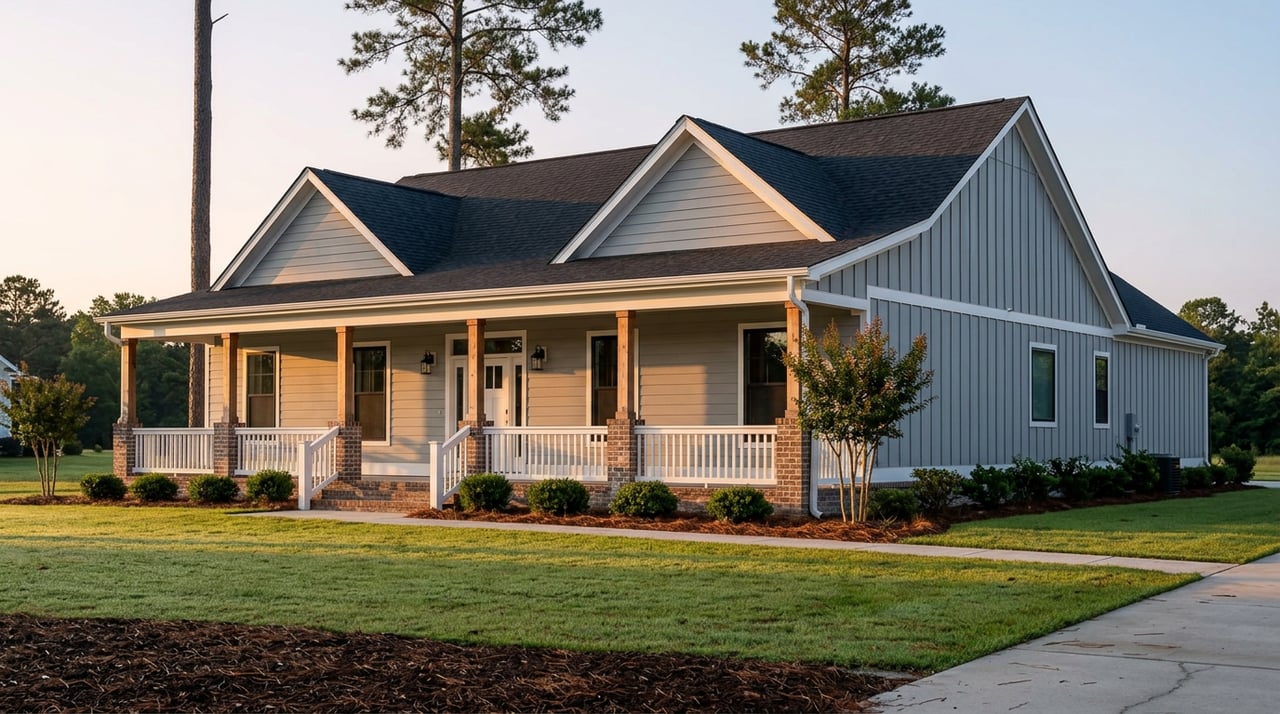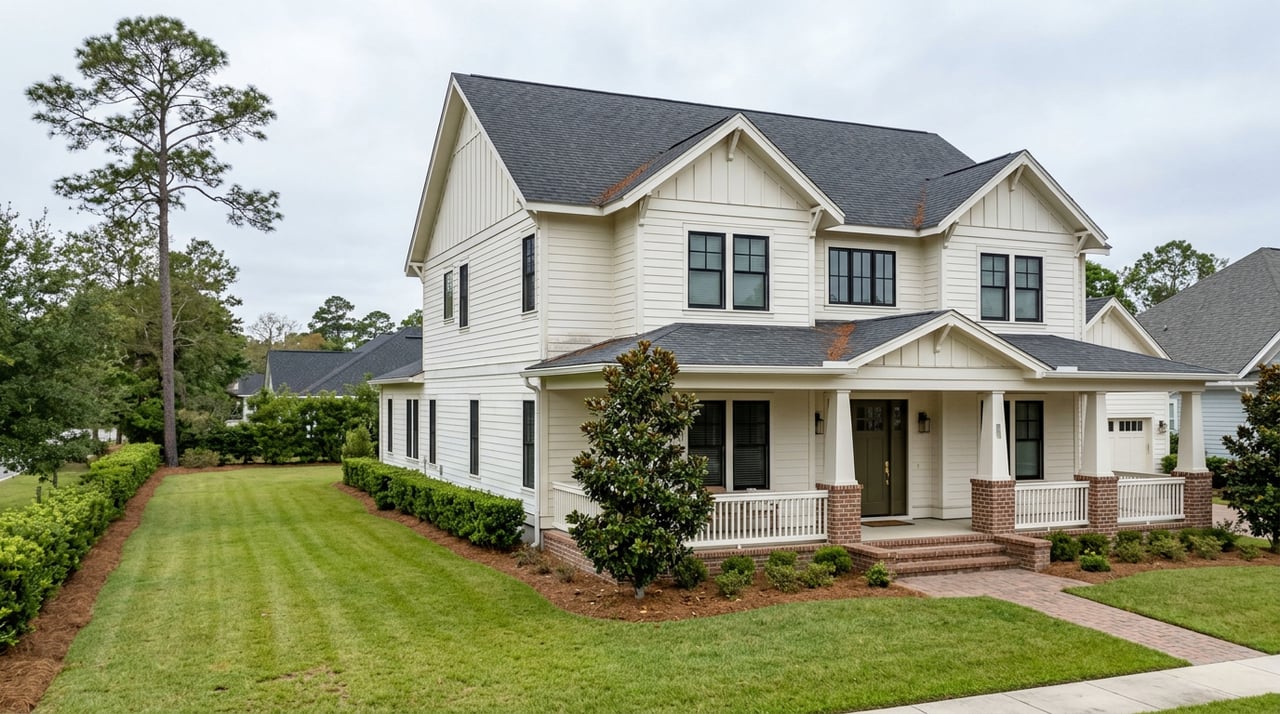
A property came across the Whispering Pines listings recently that illustrates the whole problem in one address: three combined lots totaling 1.98 acres, golf course frontage, a pool, and the pitch that buyers could build a second home or guest cottage on the same parcel. On paper, that reads like unlimited upside. Buy the land, add the structure, capture the value. In practice, nothing on that parcel gets built until Moore County's Environmental Health Department signs off on how much wastewater the soil underneath it can safely absorb.
That's the piece of the Whispering Pines market that median prices, square footage, and even acreage don't tell you. Every home in the village runs on a private septic system permitted by the county, and the North Carolina Real Estate Commission explains that the septic permit sets the bedroom limit. If you're comparing Whispering Pines to other Sandhills communities on a spreadsheet, this is the line item that changes the math.
Why a Sandhills lot doesn't behave like a Piedmont lot
Moore County sits in the Sandhills, and the soil here drains fast. That sounds like a selling point until you understand what it means for a septic system. Deep, sandy soil lets wastewater move through so quickly that it can reach groundwater before it's been properly treated, which is exactly the outcome a septic system is designed to prevent. Systems here have to be engineered around that speed, not against the slower, clay-heavy soil you'd find thirty miles north in the true Piedmont.
That engineering starts with a percolation test and a soil evaluation, both conducted by the county before anyone pours a foundation. The results determine how large the drainfield needs to be and, ultimately, how many bedrooms the system can support. A home's legal capacity in Whispering Pines isn't decided by an architect or a builder. It's decided by a soil scientist with a percolation report.
The permit is the number, not the room count
Here's the mechanism most buyers miss. In North Carolina, a septic-served home's legal bedroom count comes from the septic permit on file with the county, not from how many rooms have a closet and a window. If a house has three bedrooms physically but the septic system is only permitted for two, that home is a two-bedroom from a wastewater standpoint. Advertising it as a three-bedroom without disclosing the mismatch is treated as a material misrepresentation under North Carolina real estate practice, and it's the kind of gap that surfaces at the worst possible time: during appraisal, when an underwriter pulls the county file and the valuation snaps back to two-bedroom comparables.
This isn't a hypothetical for Whispering Pines. Recent listings in the village routinely mention septic details as selling points: a new septic system installed alongside a roof and HVAC replacement, a 5-bedroom septic permit attached to new construction in The Carolina, a system pumped and inspected as part of routine maintenance before a sale. Those examples show why septic information can matter to a property’s value and future plans.
Before you get attached to a listing that promises room to expand, add a bedroom, or build a guest cottage, the practical move is to request the septic Improvement Permit and, if one exists, the Operation Permit from Moore County Environmental Health. That single document tells you what the county has already decided the property can support, regardless of what the listing photos suggest.
Moore County's Application for Existing Septic System says a proposed pool has to sit at least 15 feet from the existing septic system and repair area, which on a tight lot can mean the difference between a straightforward addition and a redesign of the whole yard.
If you're the buyer eyeing that 1.98-acre golf-frontage listing with room for a second home, the guest cottage isn't a formality. Big acreage gives the soil scientist more room to work with.
The water and sewer confusion worth clearing up
One nuance trips up buyers who assume "no public sewer" means "no public utilities at all." It's more mixed than that in Whispering Pines. The Town of Southern Pines Utilities Division sells purchased water to Moore County, Whispering Pines, and Camp Mackall, and Carolina Water Service of North Carolina also operates as a utility within the village. That means plenty of homes here get their drinking water from a piped, purchased source rather than a private well.
Sewage disposal is a different story. There is no public sewer system reaching into the village. Every home, whether its water comes from a well or from a utility line, disposes of wastewater through its own septic system regulated by the county. That's the fixed point. Water source varies by subdivision and by house. Septic capacity does not.
| What varies in Whispering Pines | What doesn't |
|---|---|
| Water source: private well or purchased utility water (Southern Pines Utilities, Carolina Water Service) | Sewage disposal: private septic, permitted by Moore County, village-wide |
| Lot size, from tidy ranch lots to multi-acre golf-frontage parcels | Septic capacity |
| Whether a home sits inside the Country Club of Whispering Pines footprint | The percolation-driven soil evaluation that sets drainfield size |
What this means for your offer
If you're comparing Whispering Pines against a neighboring Sandhills village where public sewer already reaches most lots, you're not just comparing price per square foot. You're comparing two entirely different cost structures for future change.
That's not a reason to avoid the village. Whispering Pines still offers something a lot of nearby communities can't: golf frontage on two Ellis Maples-designed courses, the Pines and the River, both operated on a semi-private basis by the Country Club of Whispering Pines, and access to eight community lakes, with Thagard Lake as the only one open to motorized boats. It's a genuine trade. You give up the flexibility of unlimited expansion in exchange for privacy, tree cover, and water access that few Moore County villages can match.
As of August 2026, homes here listed at a median price of roughly $525,000, or about $212 a square foot, with typical time on market stretching toward 48 days, a signal that today's buyers have more room to negotiate and more time to ask the septic question before they commit. That's a market where the extra step of pulling a county permit record costs you very little and protects you from a lot.
Before you write the offer
- Ask your agent to request the septic Improvement Permit and Operation Permit from Moore County Environmental Health for the specific parcel
- Compare the permitted bedroom count against the number of bedrooms in the listing
- If the property is marketed with room to expand or add a structure, ask whether a percolation test has already been run for that specific addition
- Confirm the water source for the home, since it affects monthly costs even though it doesn't affect the septic question
- Budget separately for any septic upgrade if your plans include more bedrooms than the current permit allows
FAQ
Does every home in Whispering Pines use well water? No. Water source varies. Some homes use private wells, while others receive purchased water through Southern Pines Utilities or Carolina Water Service. Sewage disposal, on the other hand, is septic village-wide.
Is the Country Club of Whispering Pines public or private? It operates on a semi-private basis. The club's two Ellis Maples-designed courses, the Pines and the River, anchor the village's golf-frontage neighborhoods.
Can I add a bedroom or build a guest cottage on a large Whispering Pines lot? Check the property's septic records before making plans.
Where do I find septic permit records for a specific property? Moore County Environmental Health maintains these records and can confirm the permitted bedroom count and system type for any parcel in the village.
If you're weighing a home in Whispering Pines against something in Southern Pines or Pinehurst, the septic file is worth reading before the comps are. Meese Property Group works these permit records into every offer strategy in the village, so you know exactly what you're buying before you're under contract. Request a Personalized Consultation and we'll walk through the specific property, and its septic history, with you.
This article is general information, not legal, tax or financial advice. Consult a qualified professional about your situation.