If your ideal morning includes a quiet ride under longleaf pines, Southern Pines may be your perfect fit. Buying a horse-friendly home is different from buying a typical house, and the details matter. In this guide, you’ll learn what to look for in equestrian properties, how local rules work, where to find services, and how to move from browsing to closing with confidence. Let’s dive in.
Why Southern Pines works for riders
Southern Pines sits in North Carolina’s Sandhills, a region known for a welcoming equestrian community and a mix of in-town neighborhoods and rural acreage. The area supports foxhunting traditions, eventing, and relaxed trail riding, so you’ll find a steady base of trainers, shows, and local clinics. Many riders also use Carolina Horse Park for competitions and cross-country schooling, which adds depth to the regional calendar.
The local rhythm supports both recreational riders and competitors. You’ll see private barns, small schooling shows, and seasonal clinics that make it easy to stay active. That means your daily riding life can be as low-key or as structured as you want.
Must-have property features
Barn and layout
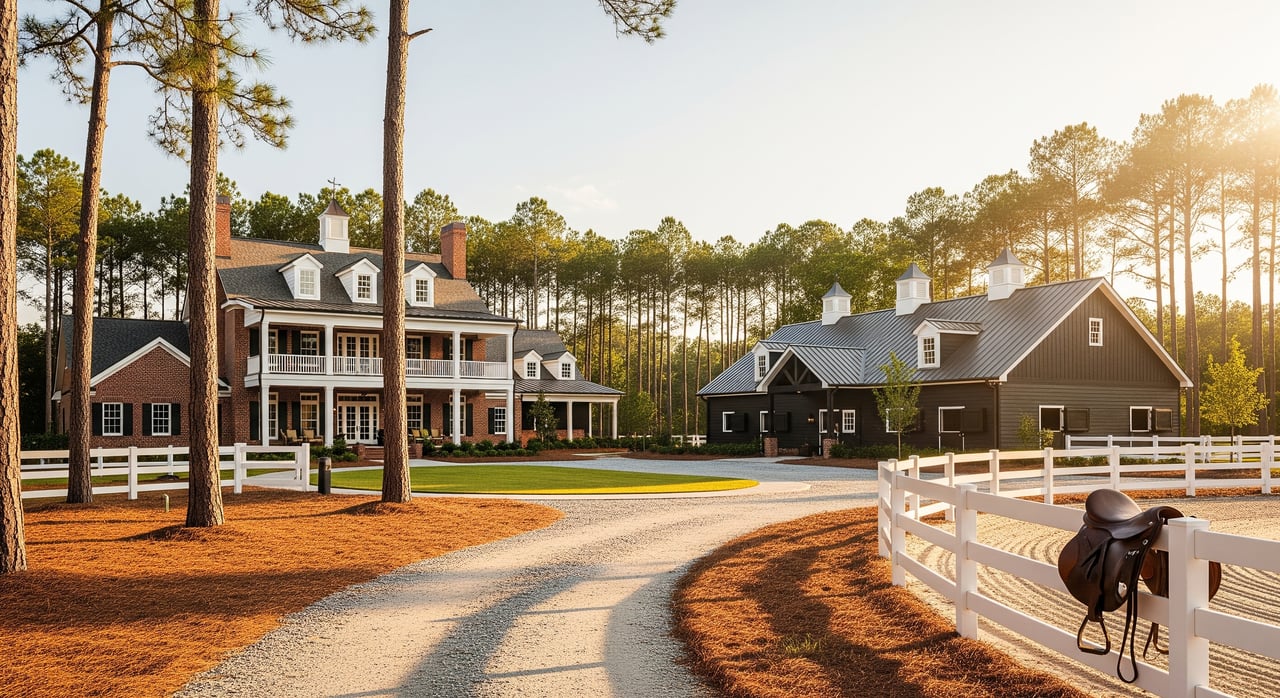
Focus on stall count and size, with many buyers preferring 12x12 or 12x14 stalls. Look for a tack room, feed storage, a safe wash or grooming area, and good ventilation and drainage. Check the roof, electrical, and fire safety features for peace of mind.
Pastures and paddocks
Plan for usable turnout of about 1 to 2 acres per horse, adjusted by pasture quality. Evaluate fencing, gate widths, run-in sheds, and a layout that allows paddock rotation to protect forage. Shade, water access, and safe gates make daily care easier.
Arena and footing
Decide whether you need an outdoor, covered, or future indoor space. Footing and drainage are critical, especially in high-traffic zones. Consider wind and sun orientation, space for lunging or warm-up, and safe arena fencing.
Access and circulation
You’ll want a driveway that accommodates trucks and horse trailers, with room to turn and park. Separate delivery access for hay or equipment helps long term. Plan space for tractors, arena drags, and tools to keep everything running smoothly.
Utilities and storage
Confirm well capacity for watering horses and potential irrigation needs. Look for dry, rodent-resistant hay storage and separate areas for equipment. If you expect to expand living space or add facilities, verify septic capacity early.
Fencing and safety
Horse-safe fencing options include post-and-rail, vinyl, and certain high-tensile systems designed for horses. Walk fencelines for loose boards, hardware risks, and weak posts. Check that gate openings are wide enough for tractors and trailers.
Sandhills site factors to know
Sandy soils and drainage
Sandhills soils tend to drain well, which supports healthier high-traffic areas and reduces standing water. The trade-off is lower nutrient and water-holding capacity, so pasture productivity may need more frequent fertilization and periodic rest. For tailored guidance, use the NC Cooperative Extension, Moore County Center for soil testing and pasture plans.
Climate and turnout
Southern Pines has a humid subtropical climate with warm, humid summers and mild winters. Longer fly seasons and summer heat affect turnout schedules and shelter needs. For climate context and planning, review regional data from NOAA.
Forage and hay supply
Warm-season grasses are common, and local hay availability can vary by season. If you plan for multiple horses, confirm hay delivery options and typical seasonal pricing. Ask sellers about their hay sources and storage routines.
Zoning, permits and legal basics
Town vs. county rules
Zoning can differ between the Town of Southern Pines and unincorporated Moore County. Some in-town parcels or subdivisions have livestock limits or HOA rules that restrict barns and outbuildings. Always verify specifics with the Town of Southern Pines Planning Department and Moore County Planning & Development before you make an offer.
HOAs and covenants
Many subdivisions prohibit livestock or require pre-approval for structures. Request and read all recorded covenants and HOA documents. Confirm setbacks, buffers, and any wetland areas that could reduce usable pasture.
Permits and construction
Barns, arenas, septic expansions, larger fencing projects, and drainage changes can require permits or stormwater review. Build time for site plans, inspections, and engineered solutions if you’re adding an arena base or managing runoff. Get written clarity on approvals before scheduling contractors.
Insurance and taxes
Horse activities carry liability risk. Ask your insurance professional about farm liability policies and equine-specific coverage, especially if you plan instruction, events, or boarded horses. For possible agricultural or timber classifications, confirm eligibility with the county tax assessor.
Services and support network
Veterinary, farrier and care team
Line up a dependable team before you close. Use the American Association of Equine Practitioners directory to locate equine veterinarians, and the American Farriers Association to identify credentialed farriers. Ask sellers for their current providers and confirm scheduling and emergency coverage.
Trainers, lessons and boarding
You’ll find private trainers across disciplines in and around Southern Pines. Boarding options range from full-care stalls to pasture board, though in-town capacity may be limited. Clarify turnout schedules, feed programs, staff coverage, and emergency protocols when comparing barns.
Supplies, hay and contractors
Regional feed stores, hay suppliers, fencing contractors, and equipment services support the Sandhills. Verify delivery distances, seasonal hay availability, and contractor lead times. Keep a short list of arena maintenance providers and fencing repair pros.
Buyer checklist for showings and due diligence
On-site inspection questions
- Barn and stalls: drainage, ventilation, roof, wiring, and fire safety.
- Fencing: type, height, stability, safe hardware, and gate widths.
- Pastures: forage mix, weeds or toxic plants, erosion, shade, and shelter.
- Water: well yield, frost-free hydrants, and livestock-accessible points.
- Arena: footing type and depth, base, drainage, and orientation.
- Access: trailer turning radius, road surface, and easement rights.
- Service contacts: seller’s vet, farrier, feed and hay suppliers, and trainer.
Key due diligence items
- HOA covenants or deed restrictions that limit horses or outbuildings.
- Any commercial use history, permits, or unresolved code issues.
- Easements, wetlands, or conservation buffers that reduce usable acreage.
- Pasture yields and typical hay needs, verified with the seller or Extension.
- Current leases or crop/hay contracts affecting the land.
Budgeting for ongoing care
- Routine vet and farrier care, vaccinations, and dental work.
- Feed and hay, including seasonal price swings and delivery.
- Utilities for barn operations and septic maintenance.
- Fencing repairs, arena dragging, and periodic footing top-offs.
- Emergency and after-hours calls for vets or farriers.
When to bring in specialists
- Add an equine-savvy inspector or experienced barn manager to your walk-through.
- Contact the NC Cooperative Extension, Moore County Center for soil tests and pasture improvement plans.
- Confirm zoning and permits directly with the Town of Southern Pines or Moore County Planning & Development.
Your next step in Southern Pines
Buying an equestrian property is equal parts lifestyle and logistics. With the right due diligence, you can match the Sandhills’ riding culture with a home and acreage that fit your goals. If you want local insight on zoning, barns, and the daily realities of horse keeping here, our team is ready to help.
For tailored guidance on properties across Moore County, connect with Meese Property Group. Request a Personalized Consultation and move forward with a clear plan.
FAQs
What makes Southern Pines suitable for an equestrian lifestyle?
- The Sandhills supports year-round riding, local schooling shows, and access to regional competition at Carolina Horse Park, plus a network of trainers and services.
How many acres per horse should I plan for in the Sandhills?
- A common rule of thumb is 1 to 2 acres per horse for turnout, adjusted by pasture quality and management; confirm with soil testing and Extension guidance.
How do local zoning and HOAs affect horses on residential property?
- Rules vary by parcel; verify livestock allowances, setbacks, and outbuilding approvals with the Town or County and read all HOA covenants before you offer.
What should I inspect in a barn before closing on a horse property?
- Check drainage and ventilation, roof and wiring, stall safety, fire extinguishers, hay storage conditions, and access for trailers and deliveries.
Where can I find equine vets and farriers near Southern Pines?
- Use the AAEP directory for veterinarians and the American Farriers Association for farriers, and confirm each provider’s service area and emergency availability.
Do I need special insurance for a private horse property in Moore County?
- Speak with your insurer about farm liability and equine-specific coverage, and consider separate policies if you plan lessons, events, or boarding operations.